
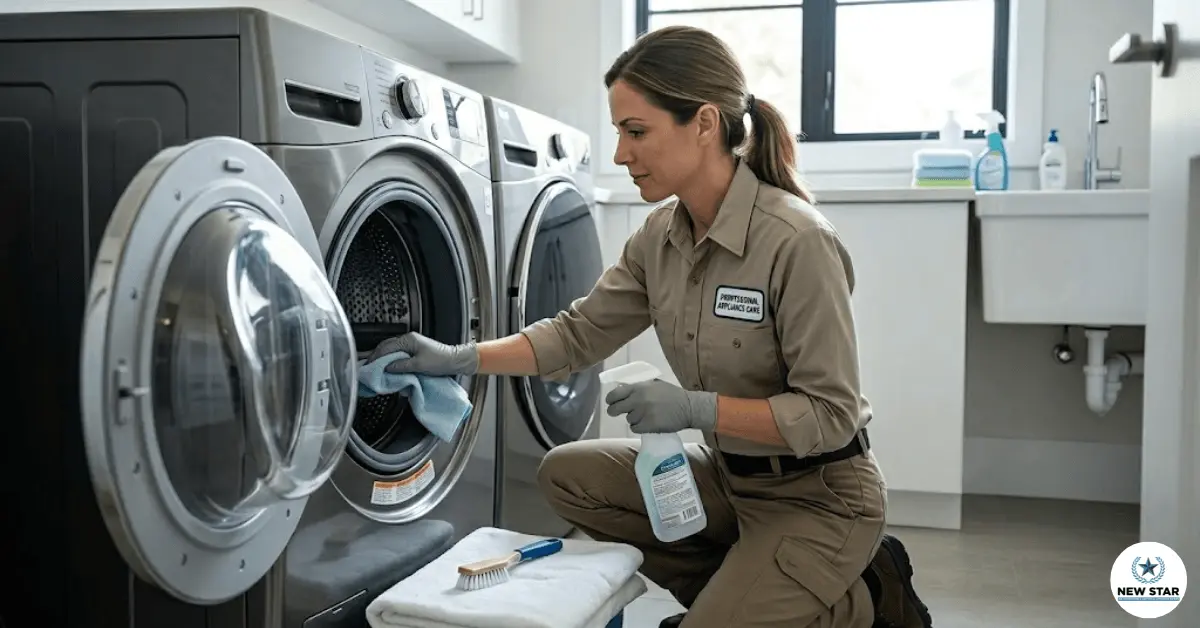
Your washing machine works hard to keep your clothes clean and fresh. However, you might not remember the last time you actually cleaned the machine itself. Soap residue, mineral deposits from hard water, and lingering moisture gradually build up inside, creating ideal conditions for mold and mildew to grow. When your supposedly clean laundry comes out with a slightly musty odor, the washing machine is probably to blame.
Learning washing machine cleaning methods is easier than you might think. Maintaining a consistent cleaning schedule helps your washing machine operate at peak performance and saves you from costly repair bills. It also guarantees that your laundry emerges truly clean from each wash cycle.
This guide will show you exactly how to clean washing machine. We’ll walk you through effective natural cleaning solutions, provide detailed step-by-step directions, and share practical advice for maintaining a fresh-smelling washer throughout the year.
Why Cleaning Your Washing Machine Is Important?
This appliance handles a lot of dirt, sweat, and grime. While the soapy water flushes most of it away, some residue stays behind.
If you do not clean your washer, soap scum and fabric softener build up inside the drum and pipes. This sticky layer traps dirt and bacteria. Over time, this buildup creates a foul odor that transfers directly onto your laundry.
When your machine accumulates dirt and grime, it must exert significantly more effort during the spin and drain cycles. This additional stress puts unnecessary wear on the appliance, which can result in component failures and expensive repair visits. By maintaining a regular cleaning schedule for your machine, you safeguard your financial investment while ensuring your clothes continue to smell fresh and clean.
Signs Your Washer Needs Cleaning
Your machine will usually tell you when it needs a good scrub. Look out for these common warning signs.
- Bad odor: If you open the door and notice a damp, swampy smell, mildew is growing inside.
Mold or black spots: Check the rubber seal around the door. Black marks indicate mold growth, which thrives in dark, damp spaces. - Dirty clothes after wash: If your clothes come out with gray streaks, white lint marks, or lingering sweat smells, the washer drum is holding onto dirt.
How Often Should You Clean Your Washing Machine?
For the best results, you should clean your machine once a month. If you have a large family, wash heavily soiled work clothes, or live in an area with hard water, you might need to clean it every two weeks. Setting a monthly reminder on your phone is a great way to stay on track.
Things That Cause Dirt, Mold & Buildup
Understanding what makes your washer dirty helps you prevent the problem in the first place.
- Detergent residue: Using too much soap leaves a sticky film behind. This residue acts like glue for dirt and lint.
- Hard water: High mineral content in your water supply creates chalky white deposits. These deposits can clog water hoses and dull your clothes.
- Moisture & closed door: Shutting the washer door immediately after a cycle traps moisture inside. This warm, wet environment causes mold and mildew to spread rapidly.
Supplies You Need
You likely already have everything you need in your kitchen pantry. Gather these supplies before you begin:
- Vinegar: Plain white vinegar breaks down mineral deposits and kills odors naturally.
- Baking soda: This gentle abrasive scrubs away grime and neutralizes bad smells.
- Bleach: Useful for severe mold problems (never mix bleach with vinegar).
- Cleaning tablets (optional): Store-bought cleaners offer a convenient alternative if you prefer not to use pantry ingredients.
How to Clean Washing Machine Step-by-Step
Follow this simple process to deep clean your appliance from the inside out.
Step 1: Run an Empty Hot Cycle with Vinegar
Start by pouring two cups of white vinegar straight into either the empty washing machine drum or the detergent compartment. Choose your machine’s hottest temperature and longest wash cycle. This hot vinegar solution will dissolve built-up soap residue and eliminate harmful bacteria.
Step 2: Add Baking Soda for Deep Cleaning
When the vinegar wash completes, add half a cup of baking soda directly to the drum. Start another cycle using hot water. This baking soda treatment will scrub away any loosened grime that remains and neutralize unpleasant smells.
Step 3: Clean the Drum Properly
Following the second wash cycle, open your washer door and clean the drum’s interior using a damp microfiber cloth. Focus particularly on the small drainage holes, making sure no buildup or debris is blocking these openings.
Step 4: Clean the Rubber Seal (Front Load)
Front-loading washers have rubber door seals that tend to collect hair, loose change, and mold growth. Carefully lift the rubber gasket and clean its interior surface with a cloth soaked in white vinegar. When dealing with persistent mold spots, scrub the affected areas using an old toothbrush.
Step 5: Clean Detergent Drawer & Dispenser
Remove the detergent drawer completely. Wash it in your kitchen sink using warm water and an old toothbrush. Make sure you scrub away all the sticky fabric softener residue. Dry it thoroughly before sliding it back into place.
Step 6: Clean Filter & Drain
Find the drain pump filter on your washing machine, which typically sits behind a small panel at the front bottom of the unit. Put down a towel to collect any water that spills out, then twist off the filter and clear away any collected debris like lint, coins, or small objects. Wash the filter with running water before reinstalling it.
Step 7: Wipe Exterior & Control Panel
Apply an all-purpose cleaner or vinegar to a microfiber cloth. Clean the machine’s outer surfaces, glass door, and control buttons to get rid of dust buildup and smudged fingerprints.
How to Clean a Front-Load Machine
Front-load machines use less water, which makes them highly prone to mold. Gravity causes water to pool at the bottom of the rubber door seal. When cleaning a front-loader, always focus heavily on wiping down and drying that rubber gasket. Leave the door wide open after every single wash to let the interior dry out.
How to Clean a Top-Load Machine
Top-load washers often have a center agitator where dirt can hide. When running your hot vinegar cycle, pause the machine once it fills with water. Let the vinegar water soak in the drum for one hour before resuming the cycle. This soaking period loosens stubborn grime near the top of the wash tub.
How to Remove Bad Smell (Deep Cleaning Method)
If your machine smells like rotten eggs or a wet dog, a basic wash might not be enough. To deep clean a smelly washer, run a cycle using liquid chlorine bleach instead of vinegar. Add half a cup of bleach to the bleach dispenser and run a hot cycle. Make sure you run an extra rinse cycle afterward to ensure all the bleach washes away before you do your next load of laundry. Remember: Never mix bleach and vinegar, as it creates toxic gas.
What Can You Use to Clean It?
People often wonder which household cleaners are safe for their appliances.
Can you use vinegar? Yes. White vinegar is excellent for descaling and deodorizing. It is safe for the internal hoses and the drum.
Can you use baking soda? Yes. Baking soda is a fantastic natural deodorizer and gentle scrubbing agent.
Can you use bleach? Yes, but use it sparingly. Bleach kills severe mold, but using it too often can wear down rubber seals.
Can you use dish soap? No. Dish soap creates far too many bubbles. The excess suds can overflow and damage the machine’s internal electronics.
Common Mistakes to Avoid When Cleaning It
The biggest mistake people make is mixing cleaning chemicals. As mentioned earlier, combining bleach and vinegar is incredibly dangerous.
A frequent mistake people make involves adding excessive detergent to their normal wash cycles. Using extra soap won’t make your clothes any cleaner, but it will leave behind residue that you’ll need to remove later. Remember to maintain your drain filter as well. When this filter gets clogged, it prevents contaminated water from draining properly, which cancels out all the effort you’ve put in.
Tips to Keep It Clean Longer
A little daily maintenance makes your monthly deep clean much easier.
Leave the door open: Always leave the washer door slightly ajar after a load of laundry. This simple habit allows fresh air to circulate and prevents mold from growing.
Use correct detergent: If you have a high-efficiency (HE) machine, only use HE detergent. Traditional detergents create too many suds, leaving behind sticky residue.
Monthly cleaning routine: Stick to your schedule. Running a quick vinegar cycle once a month stops bad smells before they even start.
Eco-Friendly Ways to Clean Machine
If you want to avoid harsh chemicals entirely, nature provides great alternatives. Lemon juice is a fantastic substitute for bleach. It contains natural citric acid that cuts through hard water stains and leaves a bright, citrus scent. You can also add a few drops of tea tree essential oil or eucalyptus oil to your vinegar cycle for natural antibacterial and antifungal power.
Final Thoughts
Keeping your washing machine clean is the secret to fresh-smelling laundry and a long-lasting appliance. By dedicating just a little time each month, you can easily remove mold, clear out soap scum, and stop bad odors in their tracks.
Now that you know how to clean your washing machine using simple items like vinegar and baking soda, it is time to take action. Grab your supplies, start a hot cycle, and give your appliance the refresh it deserves.