
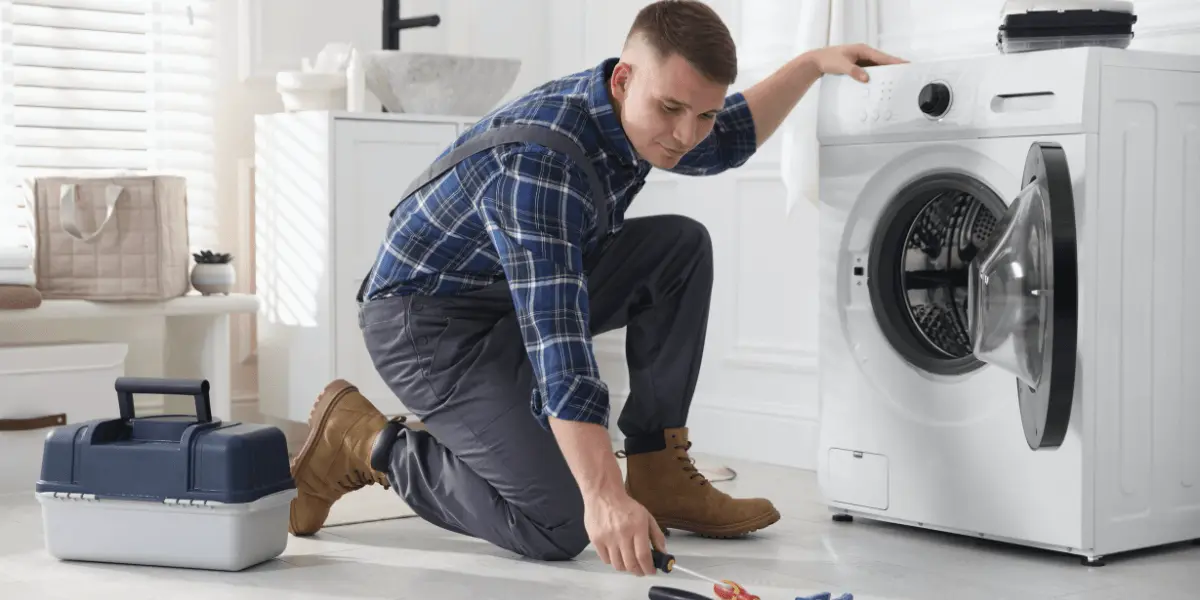
Appliances work hard for our households, but they eventually face wear and tear. Why do washing machines develop problems? The constant exposure to water, heavy loads, and electrical currents puts stress on their internal parts. Over time, belts stretch, hoses clog, and motors wear out.
Your washing machine typically gives you warning signals before it stops working entirely. Watch for unusual sounds, minor water drips, unpleasant odors, or laundry that remains overly wet after the cycle ends. Recognizing these early indicators can help you avoid costly repair expenses.
Most Common Washing Machine Problems and Solutions
1. Not Turning On:
If your appliance has no power, the fix might be simple. Start by examining the power cord and wall outlet. The door switch may occasionally malfunction and not detect when the door is properly closed, stopping the cycle from beginning.
2. Not Draining Water:
A clogged drain pump or hose usually causes draining issues. Coins, small socks, or lint can block the water flow. Clearing the drain filter often solves this issue quickly.
3. Not Spinning Properly:
When the drum will not spin, you might have an unbalanced load. If the clothes are balanced, the drive belt might be loose or broken. A faulty lid switch can also stop the spin cycle.
4. Not Filling with Water
Make sure the water supply valves in your home are completely turned on. If the valves are open, the inlet hoses might be kinked or the small screens inside the hoses might be blocked by debris.
5. Water Leakage
Leaks usually happen due to cracked hoses or a damaged door seal. Check the connections at the back of the appliance and inspect the rubber gasket around the door for tears.
6. Making Loud Noise or Vibrating
Loud banging means the load is unbalanced or the appliance is not sitting level on the floor. When you notice a grinding sound, it could indicate that the drum bearings require replacement.
7. Smells Bad
Mold and mildew grow inside damp drums and detergent drawers. Fill the washing machine with hot water and white vinegar, then run a complete cycle without any clothes to clean the inside and eliminate unpleasant smells.
8. Door Will Not Open or Lock
A broken lock mechanism will prevent the door from clicking shut. If it will not open after a cycle, water might still be inside the drum. The machine keeps the door locked for safety until it drains completely.
9. Clothes Come Out Wet, Dirty, or Stained
This happens when you use too much detergent or overload the drum. The clothes need room to move around to get clean. Also, check if the spin cycle is functioning at the right speed.
10. Keeps Tripping Power
If your appliance trips the circuit breaker, you likely have a water leak touching an electrical part or a failing motor. You should stop using it immediately and call a professional.
11. Moving or Jumping During Cycle
A jumping washer is usually uneven. Adjust the feet at the bottom until the appliance sits perfectly flat on the floor. An unbalanced load of heavy towels can also cause bouncing.
Quick Troubleshooting Checklist
Before calling a repair service, run through this quick checklist:
- Check power supply: Ensure the plug is secure and the outlet works.
- Inspect water supply: Verify that the hot and cold water valves are turned on.
- Clean the drain filter: Remove any debris blocking the water exit.
- Balance the load: Spread heavy items evenly inside the drum.
- Restart the machine: Unplug it for five minutes to reset the control board.
Washing Machine Error Codes Explained
Modern appliances display error codes when something goes wrong. Common error codes indicate specific problems like draining failures (e.g., OE or F9), filling issues (e.g., IE), or door lock faults (e.g., dE).
What should you do when an error appears? Check your user manual to see exactly what the code means. Many codes simply ask you to clean a filter or close the door properly.
Causes of Washing Machine Common Problems
1. Electrical Issues:
Faulty control boards, broken switches, and damaged wiring will stop the appliance from functioning. These require careful testing with a multimeter.
2. Mechanical Faults:
Worn belts, damaged bearings, and broken pumps are common physical failures. These parts naturally wear out after years of spinning and pumping.
3. User Mistakes
Using the wrong type of soap or leaving coins in pockets causes many breakdowns. Always check pockets before loading clothes.
4. Poor Maintenance
Failing to clean the drum, clear the filters, and inspect the hoses leads to odors, slow draining, and leaks.
DIY Fixes vs Professional Repair
1. Problems You Can Fix at Home
You can easily clear clogged filters, adjust leveling feet, and replace cracked inlet hoses without special skills. Unclogging a drain pump is also a manageable DIY project.
2. When to Call a Technician
Call a professional for internal electrical faults, motor replacements, and bearing repairs. These jobs require special tools and specific safety knowledge.
3. Safety Tips Before Repair
Make sure to disconnect the appliance from the electrical outlet before removing any panels. Turn off the water supply to prevent flooding, and wear thick gloves to protect your hands from sharp metal edges.
Common Problems by Machine Type
1. Front Load Machine Problems:
Water tends to collect in the rubber seal around the door of front-loading washing machines, which creates conditions that lead to unpleasant odors. They also experience door latch failures more frequently than other types.
2. Top Load Machine Problems:
Top loaders often suffer from agitator issues. If the agitator breaks, the clothes will not move around in the water. They also tend to go off-balance more easily.
3. Automatic and Semi-Automatic Issues:
Fully automatic machines rely heavily on complex control boards that can short out. Semi-automatic models usually face physical issues like broken spin tub motors or broken timer knobs.
Preventive Maintenance Tips
Keep your appliance running smoothly with a few simple habits.
- Regular cleaning: Clean the door seal after each use and perform a monthly cleaning cycle.
- Proper detergent use: Only use High Efficiency (HE) soap for HE models, and follow the recommended dose.
- Avoiding overloading: Leave enough space at the top of the drum so clothes can tumble freely.
When Should You Replace Your Washing Machine?
Most models last between 10 and 13 years. You should replace your appliance if it needs constant repairs, if it is leaking from the bottom tub, or if it makes a violent grinding noise during the spin cycle. Switching to the latest model can help reduce your water and electricity costs as well.
Conclusion
Dealing with household appliance breakdowns can be frustrating. However, understanding common washing machine problems helps you fix minor issues quickly and saves you money on service calls. By keeping filters clean, balancing your loads, and knowing when to call a professional, you can extend the life of your appliance for years to come.
FAQs
Why does my washing machine stop mid-cycle?
It might have detected a water supply issue, an overheating motor, or an unbalanced load. Check the display for error codes.
Why is my washing machine making noise when not in use?
If you hear water running, the inlet valve might be leaking water into the drum.
Why is the spin cycle not working?
The lid switch might be broken, or the drive belt could be snapped. It will also refuse to spin if the water hasn’t drained.