
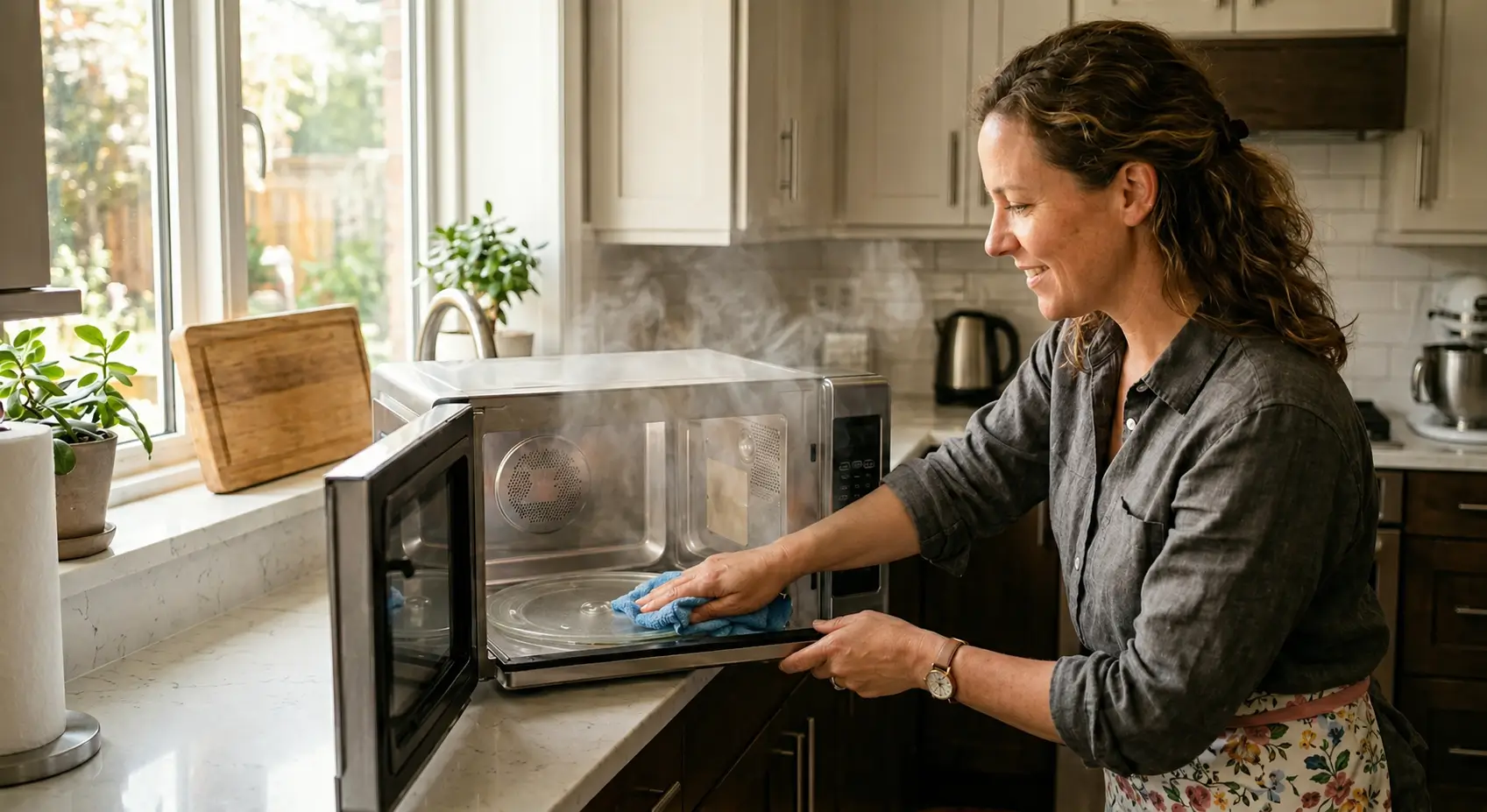
You rely on your microwave for quick meals, reheating leftovers, and popping popcorn. However, these minor drops and splashes gradually transform into tough, hardened residue that gets cooked onto surfaces. When open, it reveals unpleasant odors and crusty food particles; you know it’s time for a thorough cleaning.
Learning how to clean microwave oven doesn’t have to be a chore. With a few basic supplies you likely already have in your kitchen, you can make it look and smell brand new in just a few minutes.
Why It Is Important to Clean Your Microwave Regularly
Home appliance repair plays a crucial role in creating a healthy living environment. Old food splattered in it can create a breeding ground for harmful bacteria. These bacteria pose a contamination risk when you use it to warm up fresh food.
Beyond hygiene, stuck-on food absorbs energy. This means your appliance has to work harder to heat your food, which can lead to uneven cooking and even shorten its lifespan of the it. Regular cleaning ensures your appliance runs efficiently and your food tastes the way it should.
Things You Will Need to Clean a Microwave
Basic household supplies and natural ingredients are all you need for this task – no costly commercial cleaners required. Collect these materials:
- A microwave-safe bowl
- Water
- White vinegar, lemon, or baking soda
- Dish soap
- A soft sponge or microfiber cloth
- Dry towels
Safety Tips Before Cleaning a Microwave Oven
Your safety should be the top priority. Make sure to disconnect it from the power outlet before you begin cleaning the interior. This step ensures the appliance won’t accidentally turn on while you’re working inside it.
If you recently used the appliance, let it cool down completely. The interior walls and turntable can hold heat for a while. Finally, avoid using harsh chemicals like bleach or oven cleaner inside it, as the residue can contaminate your food later.
How to Clean Microwave Oven (Step-by-Step)
Follow these steps for a quick and effective clean.
Step 1: Prepare it for Cleaning
First, unplug the appliance. Open the door and brush out any loose crumbs from the bottom plate. Carefully take out the glass turntable and the roller ring beneath it. Set these parts aside in the sink.
Step 2: Soften Stains and Food Build-Up
The most effective method for cleaning your microwave’s interior involves using steam to soften hardened food particles. Take a safe bowl and add one cup of water to it. Put the bowl inside it, reconnect the power, and run it on high for three to five minutes until the water reaches a boil and steam fogs up the window. Keep the door shut for an additional five minutes to allow the steam to work on loosening the grime.
Step 3: Clean the Interior of the Microwave
Using oven mitts, carefully take out the heated bowl. Disconnect the power once more. Using a wet microfiber cloth or sponge, clean the top, walls, and floor of the microwave cavity. The steam will have loosened the stuck-on food, making it simple to wipe clean.
Step 4: Clean the Turntable and Removable Parts
While the inside dries, wash the glass turntable and roller ring in the sink using warm water and dish soap. If there are stubborn stains, let the turntable soak in soapy water for ten minutes before scrubbing. Dry both parts thoroughly before putting them back.
Step 5: Clean the Microwave Door
Clean the door’s interior surface with your moistened sponge. Focus particularly on the rubber gasket along the perimeter, since food particles frequently accumulate in this area.
Step 6: Wipe the Exterior and Control Panel
Remember to clean the exterior surfaces as well. Take a lightly dampened cloth and clean the outside casing, handle, and control panel. Exercise care when cleaning around the buttons to prevent moisture from seeping into the electronic components. Use a fresh towel to dry all surfaces and avoid leaving streaks.
Best Methods to Clean a Microwave Naturally
If plain water steam isn’t enough, try these natural additions.
Clean with Lemon
Slice a lemon into two pieces and extract the juice directly into your water bowl. Add both lemon halves to the bowl along with the juice. Heat the bowl in the microwave until the water reaches a boiling point. The natural citric acid works to break down grease buildup while creating a pleasant, fresh aroma, making this an effective method for eliminating unpleasant odors.
Clean with Vinegar
To clean the microwave with vinegar, mix equal parts water and white vinegar in a bowl. It until boiling, let it sit, and then wipe the inside. Vinegar is excellent for cutting through tough grime and neutralizing odors.
Clean with Baking Soda
When dealing with tough, stuck-on food residue, create a thick mixture by combining baking soda with a small amount of water. Spread this mixture onto the dried food particles and allow it to work for several minutes. Then use a moistened sponge to gently remove the softened debris.
Mix a small amount of dish soap into a bowl filled with warm water. Dip a sponge into this soapy mixture and use it to clean the inside surfaces for regular maintenance cleaning.
How to Clean a Burnt or Smelly Microwave
If the problem lies in your home’s plumbing rather than the machine itself, you will need to clear the standpipe.
Remove Burnt Smell
If you need to know how to remove the smell from the microwave after burning food, vinegar is your best friend. Place an open container of baking soda or a dish filled with white vinegar in your microwave and close the door, letting it sit through the night to eliminate unpleasant smells.
How to Clean Grease and Tough Stains
For heavy grease, dish soap mixed with a little warm water works well. You can also rub a lemon slice directly on greasy spots before wiping them down with a wet cloth.
Microwave Cleaning Tips for Better Maintenance
Keeping your microwave clean takes very little effort if you build good habits.
Make sure to cover your food every time you use it. Place a microwave-safe lid, paper towel, or a cover over dishes to avoid messy splatters. When spills happen, clean them right away while they’re still warm and come off easily. After heating foods with strong odors, keep the door open for a few minutes to let fresh air circulate through the appliance.
Common Mistakes to Avoid While Cleaning a Microwave
Stay away from harsh scrubbing materials like steel wool pads. These will scratch the inside coating and potentially cause sparking or other damage. When cleaning the control panel, apply a cleaning solution to your cloth first rather than spraying it directly on the buttons. Most importantly, don’t operate the microwave when it’s empty during cleaning, as this can permanently damage the magnetron.
How Often Should You Clean Your Microwave?
Ideally, wipe down the inside of your microwave once a week. A deeper clean involving the steam method and washing the turntable should be done once a month, or immediately after a major food explosion.
Keep Your Kitchen Running Smoothly
Regular maintenance is the key to keeping your kitchen appliances in top shape. By knowing exactly how to clean a microwave using simple, natural ingredients, you save time, protect your health, and ensure your meals always taste great. Make it a habit to wipe down splatters immediately, and your microwave will serve you well for years to come.
FAQs
How to remove bad odor from the microwave?
Boil a bowl of water mixed with two tablespoons of white vinegar or lemon juice. Let the steam sit for five minutes, then wipe the inside. You can also leave a bowl of baking soda inside overnight.
Can I use chemicals inside a microwave?
It is best to avoid harsh chemicals like bleach or commercial oven cleaners. They can leave harmful residues that might get into your food. Stick to natural ingredients like vinegar, lemon, and baking soda.
How to clean the microwave after a food explosion?
Unplug the appliance and remove the larger pieces of food with a paper towel. Then, use the steam method (water and vinegar) to soften the remaining baked-on mess before wiping it down.
Do I need to clean a new microwave before use?
Yes, it is a good idea to wipe down the interior of a new microwave with a damp cloth and warm, soapy water to remove any dust or manufacturing residues before heating food in it.